

Dr. Fall Co-Publishes Critical Edition of The Essential Senghor
Congratulations to Dr. Fall on his new publication, The Essential Senghor: African Philosophy and Black Aesthetics this past spring! Dr. Fall, along with his co-editors and translators – Dr. Doyle D. Calhoun of the University of Cambridge and Dr. Cheikh Thiam of Amherst College – are some of the first to translate Senghor’s critical essays and philosophical writings into English. Souleymane Bachir Diagne, author of African Art as Philosophy: Senghor, Bergson and the Idea of Negritude wrote of The Essential Senhor that “this invaluable reader makes Senghor’s thought directly available to an English-language audience, offering a very good overview of his philosophy, perfectly capturing his original text, and assembling selections with precision and care. It will become a touchstone for those in African studies, philosophy, art, and beyond.”
To purchase the book, visit Duke University Press below for a paper or hardcover copy.
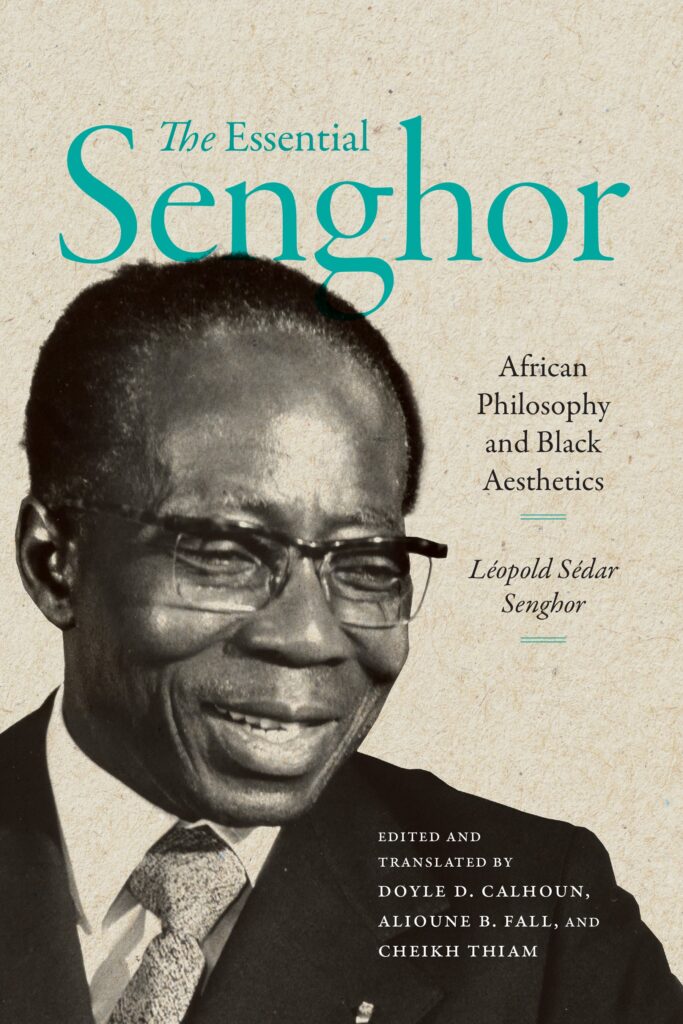
“Senegalese poet, philosopher, and politician Leopold Sédar Senghor, together with Aimé Césaire and others, developed the influential and perennially relevant negritude movement—a Black artistic, philosophical, and political expression of Black presence in the modern colonial world. The Essential Senghor provides a new opportunity for English-language readers to engage with Senghor’s critical and philosophical writings spanning from 1937 to 1985. This collection includes Senghor’s key philosophical interventions in discourses on freedom, Blackness and being, humanism, history, and more. It portrays Senghor as a pivotal intellectual in the fields of African and Black studies whose work engages a wide range of disciplines, including literature, linguistics, anthropology, religion, and art history. The Essential Senghor invites readers not only to reflect on negritude and its importance for our political present, but also to reconsider intellectual genealogies of decolonial thought, Black liberation, and African philosophy.”